

Respiratory Health | Lung Mechanics Test
£175.00
Test Your Lungs in Motion. Map Your True Breathing Mechanics — Whoever You Are.
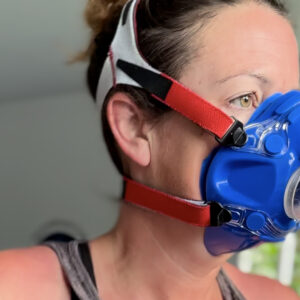
Standard clinical spirometry only checks your lung volumes while you sit completely still — but breathlessness rarely shows up sitting still. It shows up on the stairs, on a brisk walk, recovering from illness, or during exercise. Our Dynamic Respiratory Health & Ventilatory Efficiency Scan uses the CardioCoach Pro to evaluate your lungs, diaphragm, and thoracic cage as a fully integrated, moving system, whatever your starting point or activity level. By combining a brief Maximal Voluntary Ventilation (MVV) test with a gentle, progressive sub-maximal ramp on a bike, treadmill (walking or running), or rowing machine — chosen entirely to suit your comfort — we identify the physical bottlenecks that standard resting tests completely miss. Whether you’re recovering from a virus, unblocking rigid chest-wall stiffness from years at a desk, or trying to understand why exercise leaves you more breathless than it should, this clinical-grade assessment yields a precise, personal respiratory blueprint.
Includes full MVV breath mapping, sub-maximal ventilatory efficiency slope charting, and a 15-minute clinical metrics debrief.
Descrizione
Beyond Static Testing: Why Your Lungs Need a Dynamic Profile
Breathlessness on the stairs, an early “ceiling” during exercise, or simply feeling like you can never get a full breath — your lung tissue itself is only part of the story. Your respiratory system relies on a complex biomechanical engine: your diaphragm must descend freely, your intercostal muscles must flex, and your thoracic spinal joints must expand to pull air into your body. If your chest wall is rigid or your breathing muscles tire prematurely, even structurally healthy lungs cannot exchange oxygen efficiently — whether that shows up on a hike, recovering from illness, or simply in daily life. Our advanced CardioCoach Pro Respiratory Profile bridges the gap between resting health and dynamic movement. Using clinical-grade breath-by-breath gas and flow kinetics, this assessment evaluates the functional strength, physical mobility, and gaseous clearance rates of your entire respiratory architecture under controlled physical stress — however gentle or demanding that needs to be for you.
The Two-Part Assessment Protocol
This 30-minute diagnostic session is broken into two targeted evaluation phases.
Part 1: The Maximal Voluntary Ventilation (MVV) Test
Before moving, you complete a brief 15-second maximal breathing effort while seated upright. By tracking the absolute maximum volume of air you can physically move in that short burst (L/min), the CardioCoach Pro calculates your true pulmonary power.
The Health Insight: If your resting lung numbers are normal but your MVV score is low, it directly flags restricted thoracic cage expansion or a fatiguing diaphragm — your chest wall is physically locking up, keeping you from maximizing your lung capacity when your breathing rate climbs, whether that’s on a run or simply climbing the stairs.
Part 2: The Sub-Maximal Ventilatory Efficiency Assessment
Next, you move to a stationary bike, treadmill, or rowing machine for a highly controlled, gradual ramp at a pace suited to you. We do not push you to exhaustion; instead, we terminate the test around your anaerobic threshold (VT2) to chart your breathing response across sub-maximal workloads.
The Core Diagnostic Metrics Analysed
MVV Test — isolates absolute chest wall expansion & muscle power.
VE/VCO2 Slope Chart — maps exact gas exchange efficiency at the alveolar level.
VT vs fb Kinetics — identifies deep, efficient breathing vs shallow, rapid breathing.
The Ventilatory Equivalent Slope (VE/VCO2) calculates exactly how many litres of air your lungs have to shift (VE) to clear out one litre of carbon dioxide waste (VCO2) generated by your body. A healthy, efficient score sits strictly between 25 and 30. A higher slope flags ventilatory inefficiency, meaning your body is working far harder than it needs to in order to clear metabolic waste.
Tidal Volume (VT) vs. Breathing Frequency (fb) Kinetics: healthy breathing mechanics dictate that as effort rises, your breaths should get deeper before they get faster. The CardioCoach Pro tracks this relationship. If your breath depth plateaus early and you resort to rapid, shallow breathing, it unmasks a hidden physical restriction in your ribcage or core mechanics.
Who is this Assessment For?
Individuals Tracking Post-Viral Recovery — Quantify your exact baseline respiratory efficiency and monitor structural improvement over time using objective data.
Desk Workers with Thoracic Stiffness — Measure how hours of poor posture and spinal compression are actively limiting your structural breathing capacity.
Anyone More Breathless Than Expected — Whether on the stairs, on a walk, or during daily activity, understand whether the limit is cardiorespiratory, metabolic, or a mechanical restriction of the chest wall.
Athletes Experiencing a “Breathing Ceiling” — Pinpoint exactly whether your limit during training is cardiorespiratory, metabolic, or a mechanical restriction of the chest wall.
What’s Included in Your Assessment
The Complete CardioCoach Pro Respiratory Protocol — Individual laboratory testing slot utilising continuous gas-exchange and flow analytics.
Multi-Apparatus Flexibility — Performed on a stationary bike trainer, medical treadmill (walking or running), or calibrated rowing ergometer, chosen entirely to match your comfort level.
Comprehensive Pulmonary Efficiency Report — Clear, data-driven charts profiling your MVV percentages, VE/VCO2 slope metrics, and tidal breathing curves.
15-Minute Data Debrief — A consultation to review your results and outline targeted breathing mechanics or thoracic mobility strategies to unblock your limitations.
Important Session Preparation Rules
To ensure complete clinical validity and data repeatability, please follow these pre-test protocols:
Nutritional Window — Do not consume a heavy meal for at least 2 hours before your appointment. A full stomach places direct upward pressure on the diaphragm, artificially restricting your thoracic expansion data.
Airway Status — Do not undergo this test if you are currently battling an acute cold, chest infection, or active asthma flare-up.
Medication Record — If you use prescription inhalers, please record the exact time of your last dose. Unless advised otherwise by your doctor, hold short-acting inhalers for 4 hours and long-acting for 12 hours prior to arrival.
What to Bring — Wear comfortable, loose exercise clothing that allows unrestricted chest and abdominal movement, along with supportive footwear.


 Italiano
  English (UK)
  Français
  Deutsch
  Español
  Nederlands (België)